The 2024 revisions of the McDonald Diagnostic Criteria introduce important changes designed to support earlier and more consistent diagnosis of Multiple Sclerosis (MS).
Gregor Brecl Jakob explains the clinical rationale behind the revisions, including the incorporation of selected patients with Radiologically Isolated Syndrome (RIS), a unified diagnostic approach for relapsing and primary progressive MS, and the inclusion of the optic nerve as a fifth topography for demonstrating dissemination in space.
Key Insights from the Lecture:
- The 2024 criteria move closer to a biologically informed approach to MS diagnosis by incorporating clinical and imaging features that reflect underlying disease processes.
- Selected patients previously classified as having Radiologically Isolated Syndrome may now meet diagnostic criteria for MS, potentially allowing earlier treatment.
- Risk factors associated with conversion from RIS to MS include younger age, positive cerebrospinal fluid oligoclonal bands, spinal cord lesions and infratentorial lesions.
- The central vein sign may also provide useful diagnostic information in patients with RIS and has been incorporated into the updated diagnostic framework.
- Relapsing-remitting MS and primary progressive MS can now be assessed using the same diagnostic algorithm.
- Evidence presented in the session supports comparable diagnostic performance when relapsing MS criteria are applied to patients with primary progressive MS.
- The optic nerve is now included as a fifth topography for demonstrating dissemination in space.
- Optic nerve involvement can be assessed using optical coherence tomography (OCT), visual evoked potentials or MRI, provided there is objective evidence of optic nerve damage.
- Adding optic nerve involvement may improve diagnostic sensitivity while largely maintaining specificity.
- Alternative causes of optic nerve injury should always be considered before attributing findings to MS.
“2024 McDonald Criteria: what changes for Multiple Sclerosis diagnosis?”
Please subscribe to watch.
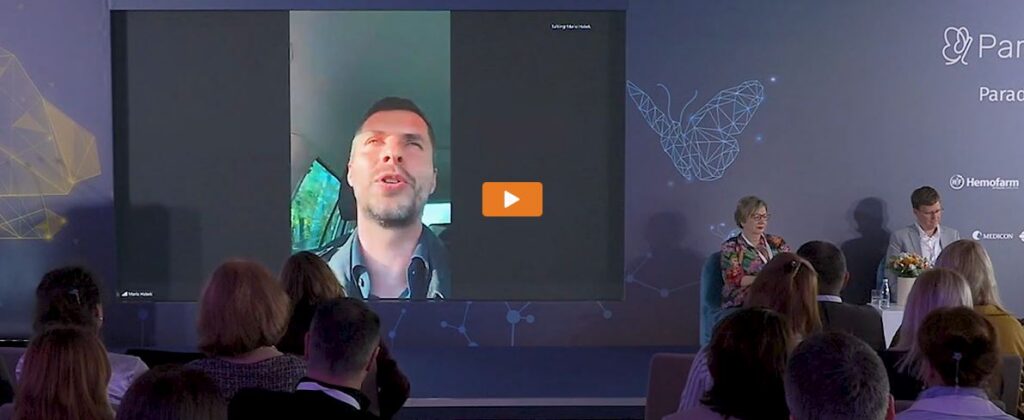
About the speaker:

Gregor Brecl Jakob
Assist. Prof. Gregor Brecl Jakob, MD, PhD, is Head of the Centre for Multiple Sclerosis at the Department of Neurology, University Medical Centre Ljubljana, Slovenia. He is a neurology consultant with a strong academic and clinical focus on multiple sclerosis and neuroimmunology. Dr. Brecl Jakob completed his PhD at the University of Ljubljana, where his research explored the impact of cognitive load on balance and gait in patients with clinically isolated syndrome.
He is an active member of the European Academy of Neurology and serves on the ECTRIMS Council (2020–2024). In addition to his clinical roles, he is a principal investigator in international clinical trials and a published author in numerous peer-reviewed journals on MS diagnostics, treatment, and patient outcomes.
Media


Details
We value your opinion.


