Seeing Optic Neuritis Through Optical Coherence Tomography: A New Biomarker
Anne-Catherine Chapelle | Annual MS Meeting 2026
Optical coherence tomography (OCT) is a valuable tool in the diagnosis and monitoring of optic neuritis, particularly in multiple sclerosis (MS) and related inflammatory disorders.
In this keynote from the Annual MS Meeting 2026, Anne-Catherine Chapelle highlights how OCT findings can help differentiate optic neuritis associated with MS, MOGAD, and NMOSD, while discussing their potential prognostic value.
With the optic nerve now recognized as a fifth anatomical location in the revised McDonald criteria, OCT offers new opportunities to support diagnostic assessment, detect subclinical optic nerve involvement, and monitor structural changes over time.
Key Insights from the Lecture:
- OCT in optic neuritis diagnosis: Understand how retinal imaging complements MRI and visual evoked potentials in assessing optic nerve involvement.
- Monitoring neuroaxonal damage: Explore the value of retinal nerve fiber layer and ganglion cell measurements in detecting and following structural changes.
- Differential diagnosis: Recognize OCT patterns associated with MS, MOGAD, and NMOSD, as well as important interpretation pitfalls.
- OCT as a prognostic biomarker: Discover how retinal measurements may contribute to assessing visual outcomes, disability progression, and disease activity.
- Future perspectives: Consider the potential of advanced OCT imaging and artificial intelligence in improving risk assessment and personalized patient care.
“Seeing Optic Neuritis through OCT: a new biomarker”
Please subscribe to watch.
Summary
Anne-Catherine Chapelle explores the role of optical coherence tomography (OCT) in the diagnosis and monitoring of optic neuritis in multiple sclerosis (MS) and related inflammatory disorders. Through clinical cases and imaging examples, she highlights how OCT can help detect optic nerve damage, differentiate between MS, MOGAD, and NMOSD, and monitor neuroaxonal degeneration. The presentation also discusses the emerging potential of OCT as a prognostic biomarker for disease progression, visual outcomes, and treatment response.
About the Meeting
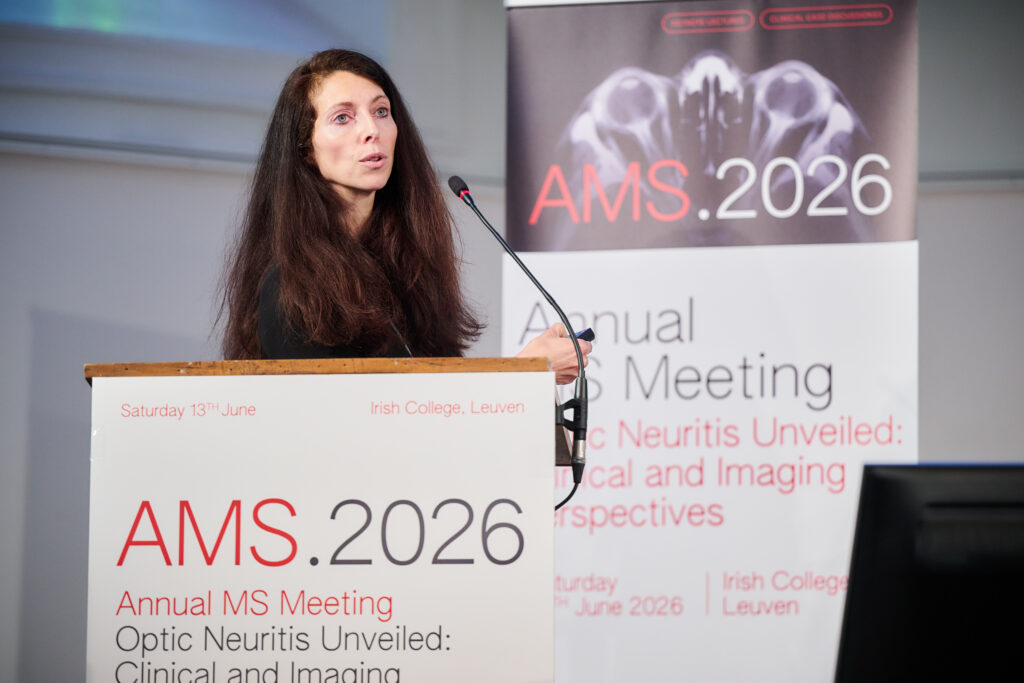
This presentation was recorded during the Annual MS Meeting 2026, held on 13 June 2026 at the Irish College in Leuven, Belgium.
Organized by the Belgian Study Group for Multiple Sclerosis (BSGMS) and Paradigms Foundation, the meeting focused on Optic Neuritis Unveiled: Clinical and Imaging Perspectives, bringing together experts to discuss advances in diagnosis, imaging, and clinical management.
About the speaker:

Anne-Catherine Chapelle is a neuro-ophthalmologist and pediatric ophthalmologist at the University Hospital of Liège, Belgium. Her clinical and research interests focus on optic nerve disorders, retinal imaging, and the use of OCT as a biomarker in neurological diseases.
Media


Details
We value your opinion.


