NMOSD: Diagnostic Challenges and Treatment Decisions in a 79-Year-Old Patient
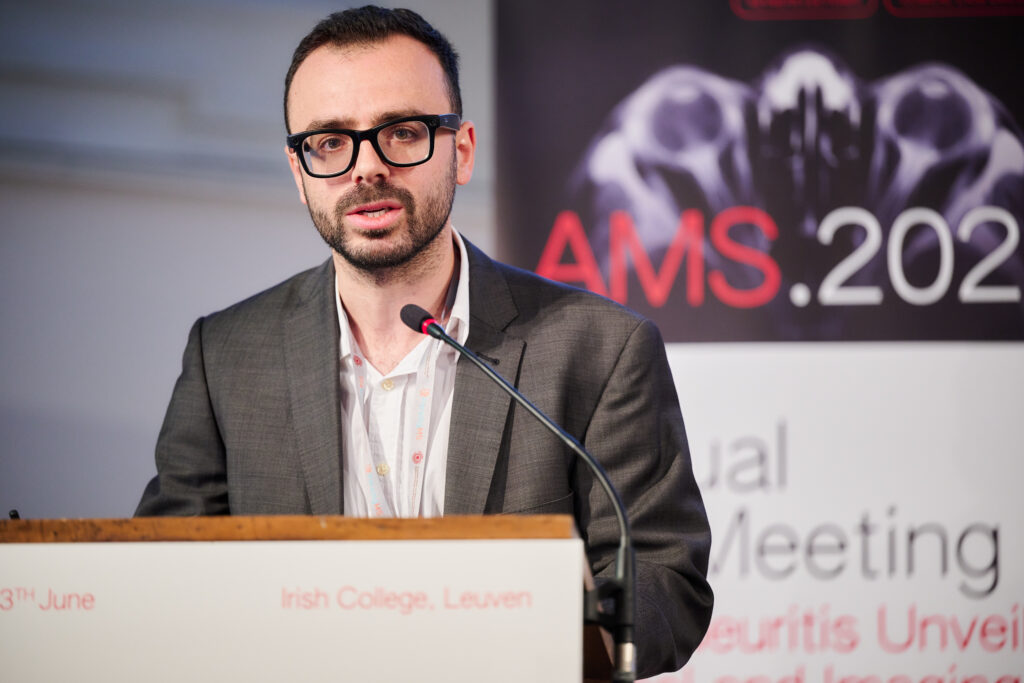
In this clinical case lecture, Thomas Scheinok presents the diagnostic and therapeutic challenges of aquaporin-4 antibody-positive Neuromyelitis Optica Spectrum Disorder (AQP4-IgG+ NMOSD) in a 79-year-old patient.
Initially presenting with acute monocular vision loss, the patient developed longitudinally extensive transverse myelitis, leading to the diagnosis of NMOSD.
Key Insights from the Lecture:
- Consider NMOSD regardless of age: Late-onset NMOSD should remain part of the differential diagnosis, even in elderly patients presenting with atypical optic neuropathy.
- Recognise the importance of AQP4-IgG testing: Early antibody testing can support accurate diagnosis and help distinguish NMOSD from other inflammatory or vascular conditions.
- Balance relapse prevention with treatment safety: Older patients may experience severe relapses and poorer recovery, while immunosuppressive treatment carries an increased risk of infections.
- Individualise treatment strategies: This case illustrates the use of rituximab with dose adjustment, infection risk management and close monitoring to support long-term relapse prevention.
“Clinical Case NMOSD: Diagnostic Challenges and Treatment Decisions in a 79-Year-Old Patient”
Please subscribe to watch.
Summary
In this clinical case lecture, Thomas Scheinok explores the diagnostic and therapeutic challenges of late-onset Neuromyelitis Optica Spectrum Disorder (NMOSD) in a 79-year-old patient. The case highlights the importance of AQP4-IgG testing, early diagnosis and individualised treatment strategies to prevent severe relapses while minimising infection risks in older patients.
About the Meeting
This presentation was recorded during the Annual MS Meeting 2026, held on 13 June 2026 at the Irish College in Leuven, Belgium.
Organized by the Belgian Study Group for Multiple Sclerosis (BSGMS) and Paradigms Foundation, the meeting focused on Optic Neuritis Unveiled: Clinical and Imaging Perspectives, bringing together experts to discuss advances in diagnosis, imaging, and clinical management.
About the speaker:
Dr Thomas Scheinok is a physician in neurology at UZ Brussel and a PhD researcher at Vrije Universiteit Brussel (VUB), Belgium. His research focuses on multiple sclerosis, remyelination and the therapeutic potential of non-invasive brain stimulation. He is also actively involved in neurological education and represents young neurologists within the Belgian Neurological Society.
Media


Details
We value your opinion.


