The treatment landscape for Multiple Sclerosis has expanded considerably, providing clinicians with a growing range of disease-modifying therapies. However, an important question remains: should treatment begin with a moderate-efficacy therapy and escalate when disease activity occurs, or should high-efficacy treatment be introduced earlier?
This webinar examines the evidence behind both strategies, with a particular focus on the window of opportunity available during the early stages of Multiple Sclerosis. The speakers review how early intervention may influence relapse activity, disability accumulation, progression to secondary progressive Multiple Sclerosis and the preservation of neurological reserve.
Key Insights from the Lecture:
After watching this webinar, participants will be able to:
- Review clinical trial evidence comparing high- and moderate-efficacy therapies.
- Examine real-world data on early intensive treatment and long-term disability outcomes.
- Consider the role of biomarkers in treatment selection and prognosis.
- Recognise progression independent of relapse activity and smouldering disease processes.
- Assess how early intervention may support the preservation of long-term brain health.
- Apply shared decision-making and individual risk–benefit assessment in clinical practice.
“Early intervention in Multiple Sclerosis: the role of high-efficacy therapies in long-term outcomes”.
Please subscribe to watch.
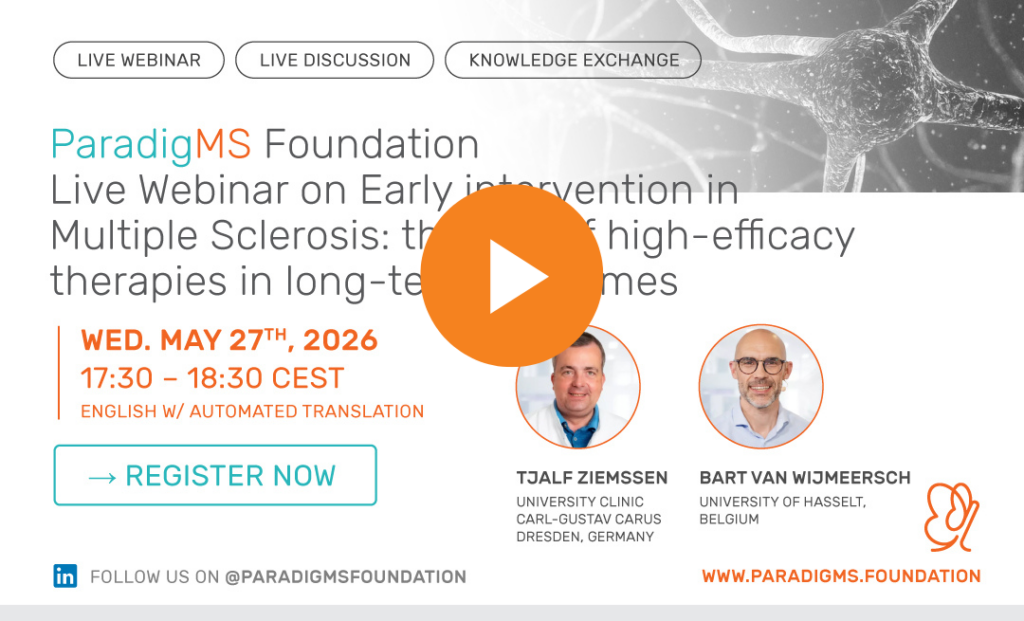
About the speaker:

Tjalf Ziemssen
Professor of Clinical Neuroscience at University Clinic Carl-Gustav Carus in Dresden

Bart Van Wijmeersch
Associate Professor of Neurology at the University of Hasselt
Media

Details
We value your opinion.


